
Cotati covers only a couple of square miles, but it holds plenty of big trees. Older lots around the six-sided downtown Hub carry oaks, walnuts and redwoods that went in generations ago, while newer neighborhoods have the usual mix of pines, ash and fruit trees that have outgrown their yards. The town sits low, near the head of the Laguna de Santa Rosa, on heavy ground that stays wet through a rainy winter. That's hard on shallow-rooted trees, and storm season brings its share of leaning trunks and fallen limbs. Lots here are often narrow and close together, so most tree work happens with little room to spare.
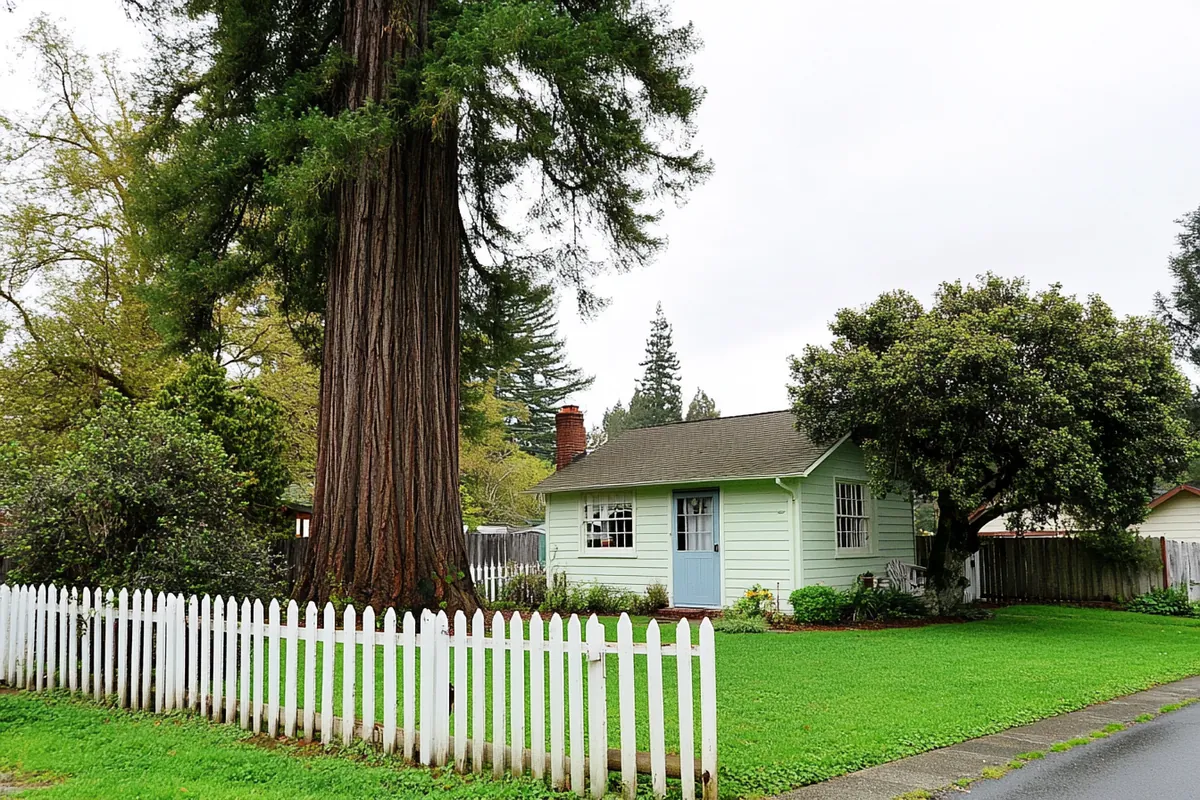
Jobs here range from one pine over a roof to a storm-snapped tree lying across the fence. When a tree has to go, the tree removal page shows how we take it apart in pieces on tight lots. If a storm has already brought one down, start with emergency tree service. Before any of that, though, check Cotati's permit rules below, because they cover far smaller trees than most people expect. We can measure the tree and handle the paperwork as part of the job. Call for a free estimate.
Cotati's Tree Permit Is Easy to Trigger
Cotati's tree rules catch more trees than most homeowners expect. A permit is required to remove any tree measuring 12 inches or more around the trunk at 4.5 feet off the ground. That's circumference, not diameter, so it works out to a trunk only about 4 inches across. A permit is also needed before grading, paving or other digging within a tree's protected zone. City staff usually visit the property to decide, and they may ask for an arborist report. Native black, live and valley oaks are a step higher: removing one needs City Council approval. Approved permits get posted on the property for at least 10 days so neighbors can appeal, unless the tree is an imminent hazard. Dead trees and hazardous trees are among the reasons a permit can be approved. Next door in Rohnert Park, single-family lots are exempt, which is a big difference across one boundary line.
Wet Ground and Crowded Lots
Two things shape most tree jobs in Cotati. The first is soil. Ground that stays saturated through the wet months lets trees tip over at the roots, especially ones with a heavy crown or roots cut by an old trench or driveway. A tree that starts leaning after a storm, with soil heaving on the far side, needs a look soon. The second is space. Many Cotati lots are close together, with fences, sheds and neighbors' roofs within reach of every limb. That means rigging nearly everything down on ropes instead of dropping it, with a landing spot picked out for every piece ahead of time. Pruning before the rainy season to take weight off big crowns is one of the best ways to head off winter failures. Fall is a good time to have it done, once the dry season is ending but before the first big storm arrives. South toward Petaluma, the same wet clay causes the same winter problems.
Common Questions
Smaller than most people guess. Cotati requires a permit for any tree 12 inches or more around the trunk, measured 4.5 feet above the ground. That's about 4 inches in diameter. City staff review most requests, while native black, live and valley oaks need City Council approval. Approved permits are posted on the property for at least 10 days before the work can happen, unless the tree is an imminent hazard.
Keep people and cars away from the side it's leaning toward, and look at the base. If the ground has cracked or bulged up opposite the lean, the roots are failing, and the tree can go over in the next wind. Call for an inspection right away. A tree that has always leaned slightly, with no soil movement, is usually less urgent but still worth checking.