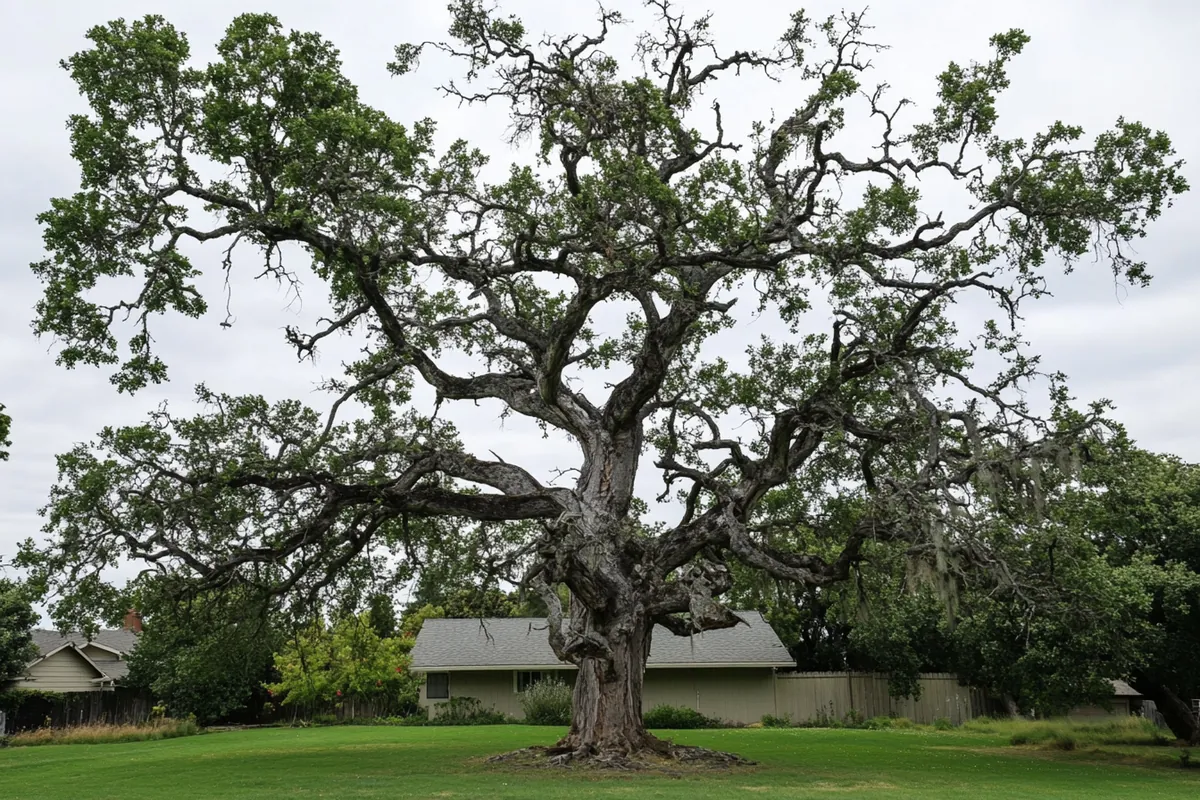
Trees rarely die overnight. They give signs for years first, and most of them are easy to miss. Leaves come out a little smaller and paler each spring. A dark, sticky spot shows up on the trunk of a coast live oak in Sebastopol. The top of a big oak in a Santa Rosa backyard thins out after a new lawn and sprinklers go in around it. By the time a tree drops whole limbs, the problem has usually been working for a long time. Our health visit is about catching it earlier. We look at the leaves, bark, trunk, root collar and the soil around the tree, then tell you what's going on in plain words and what, if anything, can be done.
Below you'll find the warning signs worth calling about, the diseases we see most here, what happens during a visit and the everyday care that keeps healthy trees that way. Some causes are easy to fix once you know them, like a sprinkler head aimed at the trunk. Others need treatment, or a hard decision. If a sick tree is already hanging over the house, tree removal may have to come first.
Warning Signs Worth a Call
The crown tells you a lot. Leaves that are undersized, yellowing or dropping early, and branches dying back from the top down, usually point to trouble at the roots. On the trunk, look for dark ooze or bleeding spots, cracks, peeling bark that exposes white or stained wood, and small holes with sawdust, which often mean beetles. At the base, watch for mushrooms in fall, a trunk that's lost its natural flare into the ground, or soil piled up against the bark. Changes around the tree count too. New irrigation, a trench, a driveway or a raised soil grade within the dripline can stress a mature tree badly, even if the damage doesn't show for a year or two. One sign alone isn't a verdict. Several together are worth a look.
The Problems We See Most in Sonoma County
Two diseases come up again and again. Sudden oak death, caused by a water mold, infects coast live oak, black oak, canyon live oak and tanoak, and shows up as bleeding cankers on the lower trunk. It spreads mainly from the leaves of California bay laurel, so oaks with bays growing right beside them are at higher risk, especially in the wetter west county. The second is oak root fungus, Armillaria, which lives on roots in the soil and attacks trees kept too moist, like native oaks with irrigated lawn planted around them. Its giveaway is a white, fan-shaped mat between the bark and wood near the base, with a mushroom smell. Beyond those two, we see bark beetles in drought-stressed pines, root damage from construction, and plain old drought stress after dry years.
What Happens During a Health Visit
We start by asking about the tree's history: when you noticed the change, whether anything nearby has been dug, built or watered differently, and how the tree did last year. Then we look closely at the crown from the ground and, when needed, from a ladder or a climb. At the base, we check the root collar, sometimes clearing a little soil to see where the trunk meets the roots. On suspicious bark, we look under the surface for fungal growth or staining. Some problems are clear on the spot. Others need a lab test, and we'll tell you if a sample is worth sending. You get a plain written summary: what we found, how serious it is, and a short list of options, from simple care changes to pruning, support or removal.
Everyday Care That Keeps Trees Healthy
Most tree problems start with how the ground around the tree is treated. Native oaks are adapted to dry summers, so keep sprinklers and summer watering off the area right around the trunk, and plant drought-tolerant plants under them instead of thirsty lawn. Pull back any soil or mulch that has built up around the base so the bark stays dry. Avoid trenching, paving or parking cars over the root zone, which spreads well past the edge of the canopy. Clear bay laurel leaves from about 15 feet around the trunk of a healthy oak. Prune deadwood when you see it, and keep oak and bay pruning to dry weather. Younger trees, and trees in their first summers after a nearby construction project, may need deep, slow watering every few weeks during a hot spell.
A tree with a sound root system but a weak fork can often be kept with tree cabling and bracing once its health is back on track.
Frequently Asked Questions
Look at the top first. A crown that's thinning year after year, with dead branches at the tips and small, pale leaves, is a strong warning. Bark that's falling away, oozing or full of tiny holes adds to the case, and so do mushrooms at the base. Scratch a small twig with your fingernail: green under the bark means it's alive. Brown and dry on many twigs means it's time to get the tree looked at.
Sometimes, if the cause is caught early and it's something you can change. Oaks stressed by summer watering, buried root collars or soil compaction can recover when those conditions are fixed. Early sudden oak death infections can sometimes be slowed with preventive treatments and by clearing nearby bay laurel. Once oak root fungus has girdled the base or most of the crown is dead, though, the honest answer is usually removal before it becomes a hazard.
Usually not, if they're established native oaks. Valley oaks and coast live oaks are adapted to Sonoma County's dry summers, and regular summer water near the trunk can invite oak root fungus. Young oaks in their first few years are different and benefit from occasional deep watering. If an older oak sits in a lawn that's already watered, keep the sprinklers aimed away from the trunk and leave the area around the base dry.