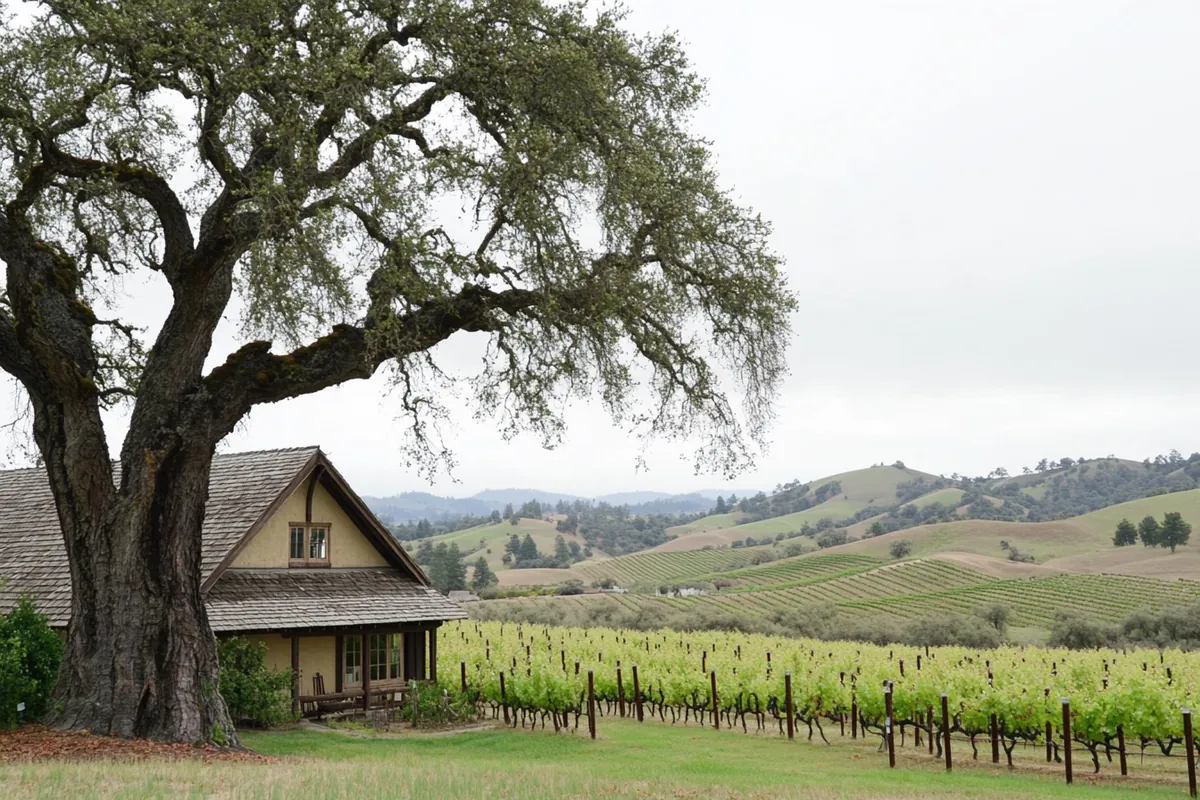
Healdsburg sits where three valleys meet, with the Russian River curving around Fitch Mountain just east of downtown. Summers are hotter here than in Santa Rosa, and the hills around town dry out fast. That shapes the tree work. Oaks on hillside lots grow wide and heavy, often reaching over roofs and decks. Older neighborhoods near the plaza have big walnuts, oaks and redwoods that have been in place for generations. Along the river, cottonwoods and willows grow quickly and drop limbs. And every summer, fire season brings inspections and the push to clear brush and limb trees up around homes on the hillsides.
We do a lot of fire-season work in Healdsburg, and most of it falls under wildfire defensible space, which covers the limbing, thinning and brush work around homes. For oaks that are healthy but overgrown, tree trimming and pruning takes weight off without changing the tree's character. Many Healdsburg lots are reached by steep, narrow drives, so we plan where the trucks and chipper can sit before the work day. Call for a free estimate.
Healdsburg's Heritage Tree Rule
Healdsburg's heritage tree rule is simpler than most. Any tree with a trunk 30 inches or more across, measured 2 feet above the ground, counts as a heritage tree, along with any tree the City Council designates for its history or significance. Removing a heritage tree normally needs a permit. Note the measuring height: 2 feet up, not the 4.5 feet most other cities use, so a tree can qualify here sooner than you'd expect. There are useful exemptions. Routine pruning and trimming don't need a permit, and neither does removing a heritage tree on a parcel with a single-family home that can't be further subdivided. Dead trees, or trees so damaged they're no longer viable, are exempt once the city arborist and the planning and building director agree. Many homeowners here are surprised to learn their big oak is exempt, while others find the opposite. Either way, the answer depends on the parcel, not just the tree. Up the highway in Cloverdale, the rules aren't the same, so we check every address.
Hillside Oaks and River Trees
On the hills around town, the main job is managing big oaks on slopes. A wide oak on a hillside lot tends to grow heavier on the downhill side, toward the light, and the house is often right below it. Careful reduction pruning on that side takes off weight without leaving the tree lopsided. On steep ground, everything comes down on ropes and gets carried or chipped where the truck can reach. Down by the Russian River, cottonwoods, willows and alders grow fast in the wet soil and can drop large limbs with little warning, especially after high water loosens the bank. Trees near creeks may also fall under extra rules, so we look at the site before cutting. River trees usually need lighter, more frequent pruning than oaks, since they put on new growth so quickly. Over in Windsor, oaks are facing the Mediterranean oak borer, so it's smart to check Healdsburg's valley and blue oaks for the same pinhole signs.
Common Questions
Measure its trunk at 2 feet above the ground. If it's 30 inches or more across, it's a heritage tree under city code, whatever the species. Trees the City Council has designated for historic or cultural value also count. Even so, removing one may not need a permit if your parcel holds a single-family home and can't be further subdivided, which covers many residential lots.
Late spring is the sweet spot, after the rains have stopped but before the grass dries out and fire season inspections begin. Healdsburg heats up early, so waiting until July means working in the heat and racing the inspection schedule. Tree limbing and roof clearance can be done most of the year, and fall is a good time for a second gutter and roof cleanout after the leaves drop.