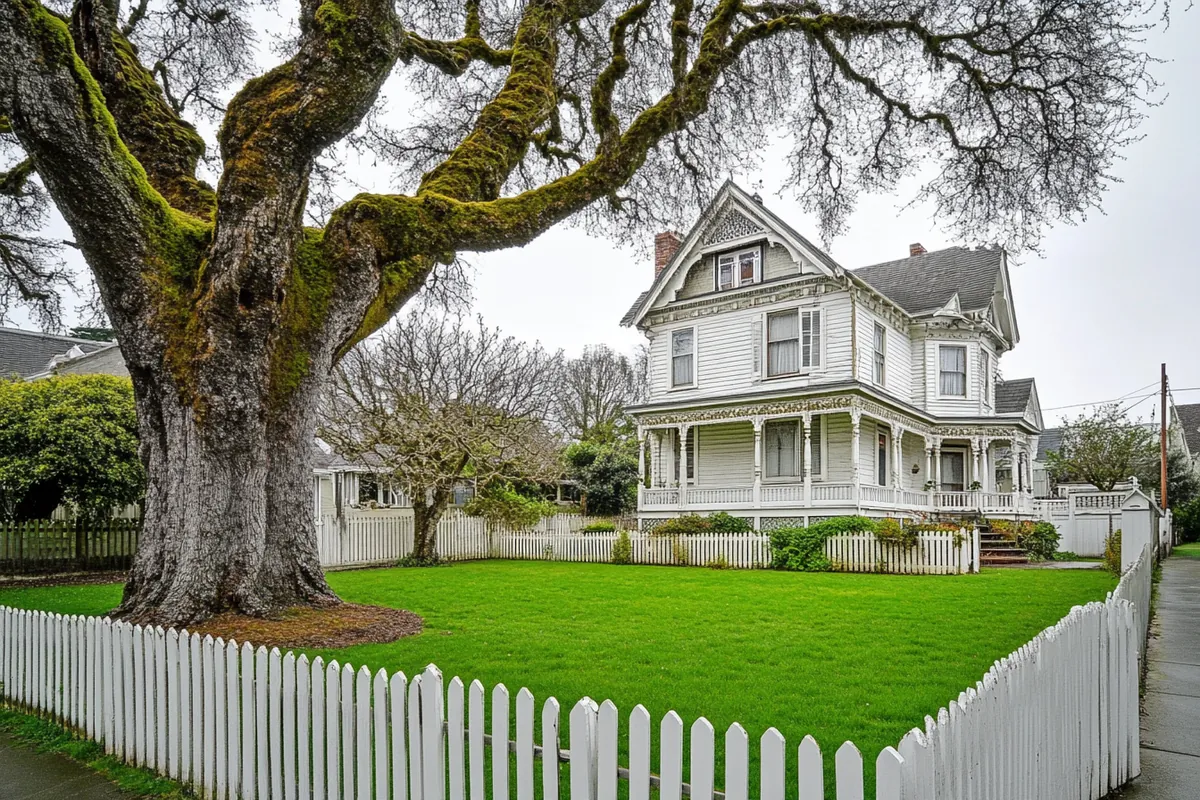
Petaluma trees deal with wind most other parts of the county don't see. Cool ocean air pushes inland through the low gap in the coastal hills almost every afternoon, and trees here grow leaning away from it, with heavier limbs on the downwind side. On the west side, big yards behind Victorian and Craftsman homes hold walnuts, oaks and redwoods that are decades old. Out on the ranchland edges, rows of eucalyptus and cypress planted as windbreaks have grown huge and brittle. Winter storms hit all of them, and the clay soil that holds water around town doesn't help a shallow root system.
Our Petaluma work runs from routine pruning to taking down a storm-cracked windbreak tree near a house. If a tree is already down, start with our emergency tree service page. For a tree you want to keep but don't fully trust, tree cabling and bracing is often the answer. Most of our Petaluma visits end up mixing the two kinds of work: a bit of removal where a tree is past saving, and pruning on the ones worth keeping. Call for a free estimate.
Petaluma's Protected Trees, Oaks Included
Petaluma protects oaks at smaller sizes than either Santa Rosa or Sebastopol. Native oaks, including valley, coast live, black, blue and Oregon oak, count as protected at just 4 inches across the trunk, measured at 4.5 feet. California buckeye counts at 6 inches, bay at 12 and redwood at 18. Trees along creeks and trees on public streets are protected at any size. The good news for most homeowners: removing a protected tree that has nothing to do with a development application or permit is exempt from the chapter. That changes when you're planning an addition, a pool or an outbuilding near the tree. Then the city asks for an arborist report, and bigger healthy trees can go to the Planning Commission. In practice, that means the timing of a removal can matter. Taking out a declining oak before you file plans for an addition is a very different process than taking it out afterward, so it's worth talking it through first. Next door in Cotati, the rules work differently.
Windbreak Trees and Wind-Shaped Oaks
The tall rows of eucalyptus and Monterey cypress around Petaluma did their job for generations of ranchers. Now many have reached a size where they're more risk than shelter. Eucalyptus is known for dropping big limbs without warning, and both species grow brittle as they age. When one goes over, it often takes the next tree in the row with it. These trees usually can't be dropped whole, since they're tall and often lined up along a driveway or fence, so they come down in sections, the same way we'd take down a tree over a house. The oaks need a different approach. A wind-shaped oak with most of its weight on one side can usually be kept with some careful reduction pruning on the heavy side. Reducing the long limbs on the downwind side takes away the leverage that cracks a trunk in a winter storm, without making the tree look chopped. We see the same wind-shaped trees over the hill in the town of Sonoma, where afternoon wind off the bay does the shaping.
Common Questions
It depends on what else is happening on the property. Native oaks in Petaluma are protected from 4 inches in diameter, but removing one that isn't tied to a development application or permit is exempt from the city's tree preservation chapter. If you're planning an addition, pool or other project near the tree, the city requires an arborist report, and larger healthy oaks can go to a public hearing. Call the city before cutting if there's any doubt.
They can be, especially as they age. Eucalyptus has a habit of shedding heavy limbs suddenly, sometimes on calm days, and old windbreak trees are often far taller than anything else nearby. That doesn't mean every one has to go. Removing deadwood and reducing a few long limbs can make a healthy tree much safer. Trees with cracks, rot near the ground or a new lean are the ones to look at first.