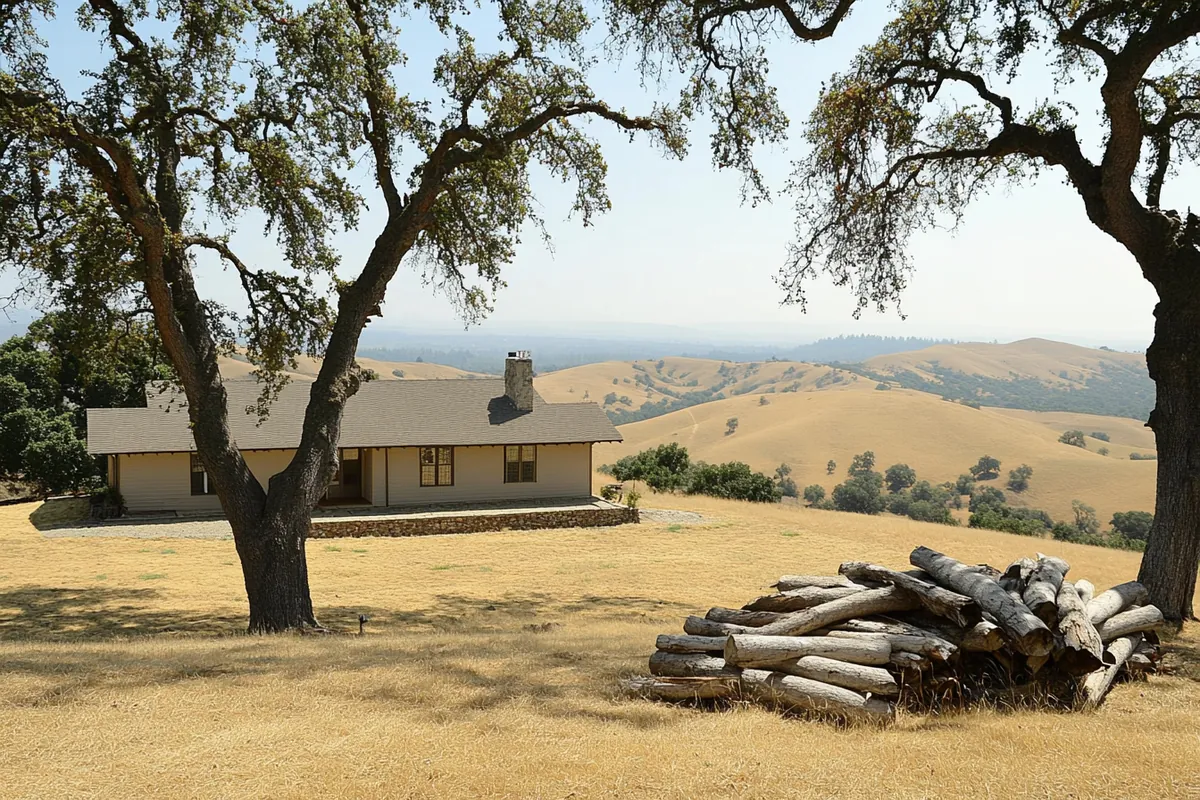
Anyone who lived here through the fire years knows how fast it moves. Most homes that burn don't catch from a wall of flames. They catch from embers landing in dry leaves, a branch over the roof or a bark-mulched bed against the siding. Defensible space is the work of taking those fuels away. On a hillside lot above Healdsburg, that can mean limbing oaks and thinning brush down the slope. Along the dry edges of Cloverdale, it's often clearing tall grass and cutting back trees that have grown into the eaves. The rules have specific distances, and fire inspectors check them, so this is work worth doing right.
Below we walk through what inspectors flag most often, the 5, 30 and 100 foot lines around a house, what a clearing day looks like, and how to keep the space cleared once it's done. Most of the work is limbing, thinning and cleanup rather than cutting trees down, and a well-kept tree can stay right next to the house. Some homes do need a tree taken out entirely, and our tree removal page covers how that works.
What Inspectors Flag Most
A few problems show up on nearly every inspection list. Limbs spreading over the roofline, or reaching within 10 feet of a chimney. Leaves and needles piled in gutters and on the roof. Trees with limbs running all the way to the ground, which gives a grass fire a path up into the crown. Fire crews call those ladder fuels. Dead brush, dead branches and dead trees anywhere near the house. Tall dry grass in the first 30 feet. In unincorporated Sonoma County, the county's vegetation code asks for trees to be limbed up at least 6 feet from the ground, and recommends up to a third of the tree's height on taller trees. If you've already received a notice, bring it when you call, and we'll work through the items on it one by one. Most notices list a deadline, so tell us the date on yours.
The 5, 30 and 100 Foot Lines Around Your House
Think of the space around your home as three rings. The first 5 feet is the newest one, called Zone 0, approved by the state Board of Forestry in August 2026 for the highest-risk areas. It's meant to be ember-resistant: no bark mulch, dead leaves or firewood there, no branches under the eaves, a 10-foot gap between branches and the chimney, and 5 feet of clearance above the roof. Existing homes get a phased timeline to comply. From the house out to 30 feet, Zone 1, dead plants and leaf litter come out, grass stays short and tree limbs get raised. From 30 to 100 feet, or your property line, Zone 2 is about breaking up fuel so a fire can't run continuously, with trees limbed and dead material cleared. Steeper lots may need more.
A Clearing Day, Start to Finish
We start with a walk around the property with you, marking which trees need limbing, which branches are over the roof and which brush or dead trees should go. On the day, a climber handles the roof and chimney clearance first, since that work is close to the house and needs the most care. The ground crew limbs trees up, cuts back shrubs and brush, rakes leaf litter away from the walls and clears out the gutters. Cut material goes through the chipper. Chips are hauled away rather than spread near the house, since loose wood chips count as fuel close to the walls. Bigger logs can be hauled or cut and stacked well away from the house. At the end, we go down the inspection list together, item by item.
Keeping It Cleared Year to Year
Defensible space isn't a one-time job. Grass grows back every spring, trees keep pushing branches toward the roof and oaks drop leaves into the gutters every fall. Most homes do well with one main clearing in late spring, after the rains stop and before grass dries out and inspections start, plus a quick gutter and roof cleanout in fall. Trees that were limbed up need checking every year or two as new growth fills in. If you're replanting, choose lower, well-spaced plants near the house and keep trees clear of the eaves from the start. And keep the notice or checklist from your last inspection, since next year's inspector will often check the same points.
Branches pushing into the eaves on a healthy tree are a pruning job, so pair your clearing with tree trimming and pruning and handle both in one visit.
Frequently Asked Questions
Zone 0 is the first 5 feet around your home, the area closest to the walls, deck and roof. California's Board of Forestry approved rules for it in August 2026, covering the state's highest fire-risk areas. The goal is to keep anything embers can ignite away from the house: no wood mulch, leaves, firewood or dead plants, and no tree branches under the eaves. Existing homes have a phased timeline to comply.
Trees can stay close to the house as long as they're kept clean and clear. In the highest-risk areas covered by Zone 0, branches need 5 feet of space above the roof and a 10-foot gap from any chimney, and none should hang under the eaves. Dead branches have to come out. Farther from the house, the focus shifts to limbing trees up so fire can't climb from the ground into the crown.
It depends on where you live. In unincorporated areas, the county's fire prevention staff at Permit Sonoma run hazardous vegetation inspections. Inside city limits, your city's fire department or local fire district handles it. Sonoma Valley Fire, for example, inspects in its own area. If you're not sure, the county's zoning lookup tool shows which fire agency covers your parcel.