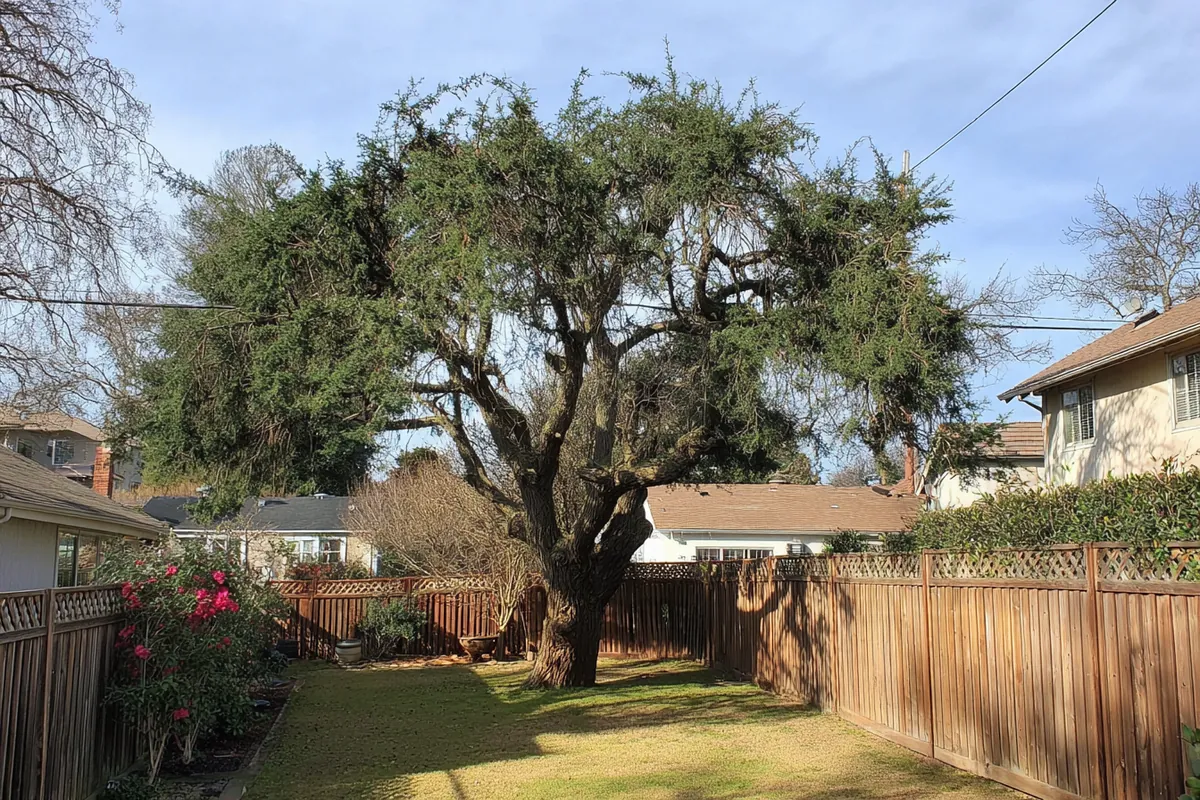
Most trees we trim aren't in trouble yet. They're just heavy. A coast live oak in Healdsburg puts on years of growth until its limbs rest on the roof. A row of redwoods in the town of Sonoma gets so dense that wind can't pass through, so it pushes on the whole tree instead. Fruit trees go years without a cut and start splitting under their own crop. A good trim takes out the right wood in the right places so the tree carries less weight, lets light into the yard and stays clear of the house, the gutters and the power drop. Done well, nobody walking by can tell exactly what was cut.
Below we cover the signs a tree is due, the main types of pruning cuts, how a trimming visit goes and when each kind of tree should be pruned. A trim is also the least expensive tree work you'll pay for over the years, since it heads off most of the bigger jobs on this site. If a big limb is already cracked or split, though, tree cabling and bracing may be the better fix.
Signs a Tree Is Carrying Too Much
Branches touching the roof or scraping the gutters are the most common reason people call. Close behind: limbs hanging low over the driveway, a canopy so thick the lawn underneath won't grow, and dead branches still hanging in the crown after the leaves come out. Watch for limbs that grow long and thin, reaching sideways toward the light with most of their leaves at the tip. Those are the ones that fail on still summer days. On oaks, look for branches that cross and rub, since the worn spot lets decay in. On fruit trees, it's the limbs that bent to the ground under last year's crop and never came back up. And if your fire district's inspection flagged trees hanging over the house or limbs too close to the ground, trimming is how you clear it. None of these mean the tree is in trouble. They mean it's due.
Three Cuts and What Each One Fixes
Crown thinning takes out selected inner branches so wind and light pass through. The tree keeps its shape, just with less sail. Crown raising removes the lowest limbs to open space underneath, for a walkway, a driveway or the 6 feet of clearance Sonoma County's defensible space rules ask for. Crown reduction cuts an overlong limb back to a smaller, healthy lateral growing in the same direction, so the end weight drops and no stub is left behind. Topping is off the table for us. Lopping big limbs flat across the top triggers a burst of thin, weakly attached sprouts that regrow quickly and snap in the first strong wind. We place each cut just beyond the branch collar, that raised ridge at the base of a limb, which lets the tree close the wound by itself. Most jobs use a mix of all three. A big valley oak over a patio, for example, might get thinned through the middle, raised over the walkway and reduced on the one limb that reaches toward the roof.
How a Trimming Visit Goes
It starts with a walk around the tree with you. We point out what we'd take and why, and you tell us what matters to you, whether that's a view, shade on the patio or space for a new roof. Then a climber goes up and works through the crown branch by branch while the ground crew clears what comes down. Anything heavy above the roof gets roped and lowered under control. Smaller wood goes straight through the chipper. Most trims of one or two trees fit in a few hours. Before we leave, we rake, blow off the deck and driveway and check the gutters for anything that fell in. Then we walk the yard with you one more time, and if you'd like a branch left or taken, we handle it right then.
When Each Tree Should Be Pruned
Timing depends on the tree. Deciduous trees like valley oaks, maples and most fruit trees prune best while dormant, from late fall after the leaves drop through early spring. Oaks and bays here need a bit more thought because of sudden oak death. The pathogen spreads in wet weather, so we schedule oak and bay work for dry weather whenever the job allows. Clearing bay laurel leaves within about 15 feet of a healthy oak's trunk can lower its risk of infection. Redwoods and other conifers can be pruned most of the year. Dead or hazardous wood is different: it comes out whenever we find it. Most mature trees stay in good shape with pruning on a three- to five-year cycle, though fast growers and trees near roofs may need it sooner.
If your trees are part of a fire inspection, the wildfire defensible space page explains the full 30 and 100 foot zones.
Frequently Asked Questions
For most trees, it's in spring while new leaves are coming out. The tree has just spent its stored energy on that growth, and heavy cuts then set it back. Oaks have one more bad window here: wet weather, when sudden oak death and other diseases spread most easily. Late fall into winter works well for deciduous trees, and we keep oak and bay work to dry weather when we can.
Look at the cuts and the shape. Good pruning leaves small, clean cuts at the base of each branch, with no stubs and no bark torn down the trunk. The tree should look natural afterward, just thinner. Big limbs cut off flat across the top, a tree stripped of all its inner branches, or climbing spikes used on a tree that isn't coming down are signs of a crew cutting corners.
A mature, healthy tree usually needs pruning about every three to five years. Younger trees benefit from lighter, more frequent pruning to set a strong structure early. Fast growers like Monterey pine, eucalyptus and acacia may need it sooner, and so does any tree that grows back toward your roof or power line. Fruit trees are usually pruned every winter for a better crop.