A tree usually doesn't need to come down because of one thing. It's a mix. Maybe a valley oak in your Santa Rosa backyard has a split running down the trunk, or a Monterey pine in Sebastopol has tipped a few degrees since the last big rain. Maybe the roots are lifting the driveway, or the tree has died back and dropped half its limbs. Whatever the reason, a big tree near a house is thousands of pounds of wood that has to come down without hitting anything on the way. That takes ropes, planning and a crew that has done it many times, and that's the work we do every day.
Below you'll find how we decide a tree has to go, how Santa Rosa's heritage tree rules work, what removal day looks like and what's left in your yard afterward. If you're torn between removing a tree and keeping it, we'll lay out both options plainly, including what each one is likely to cost you over the next few years. And if a tree just came down in a storm, our emergency tree service page covers what to do first.
What Usually Decides It
We look at five things before we ever recommend taking a tree out. First, the trunk: deep cracks, cavities or a hollow sound when we tap it. Second, the lean, and whether it's new. A tree that has leaned for 40 years is different from one that shifted last month, especially if the soil on the high side is lifting. Third, the roots. Mushrooms at the base or roots cut by a trench can mean the anchor is failing. Fourth, the canopy. A crown that's mostly dead wood won't come back. Fifth, location. A healthy tree can still be the wrong tree if it's growing into the foundation, the septic line or the power drop to the house. If the tree is worth saving, we say so and point you toward pruning or cabling instead.
Santa Rosa's Heritage Tree List, Size by Size
Santa Rosa protects certain native trees once they reach a set trunk size, measured 4.5 feet above the ground. The smaller thresholds catch people by surprise: valley oak, blue oak and California buckeye count at just 6 inches in diameter. Madrone counts at 12 inches. Coast live oak, black oak, Oregon white oak and canyon oak count at 18 inches, along with red and white alder. Redwood, bay, Douglas fir and big leaf maple count at 24 inches. On a developed lot, removing one of these takes a written application to the city showing why it needs to go, and the permit is good for 60 days. Other cities in the county and unincorporated Sonoma County have their own rules, and some only apply to certain species or lot types. So we look up the address before any work is scheduled. When the city wants an application, we explain what it has to show.
Rigging a Tree Down Piece by Piece
Most trees near homes can't be dropped in one piece. There isn't room. So a climber goes up and takes the tree apart from the top down. Each limb gets tied off with a rope that runs through a pulley higher in the tree, and the ground crew lowers it slowly to an open spot in the yard. Once the crown is off, we work down the trunk a few feet at a time. On a tight lot, that can mean pieces small enough to carry out by hand. A crane only comes in when a tree is too big or too weak to climb safely, and you'll know at the estimate if your job needs one. Most single trees take a day or less. Tarps and plywood protect lawns, beds and walkways where the wood lands, and we keep a clear path to the street so nobody is stepping over cut limbs. Trees tangled in overhead wires wait until PG&E de-energizes or clears the line, and only then does a climber go up.
What's Left When We're Done
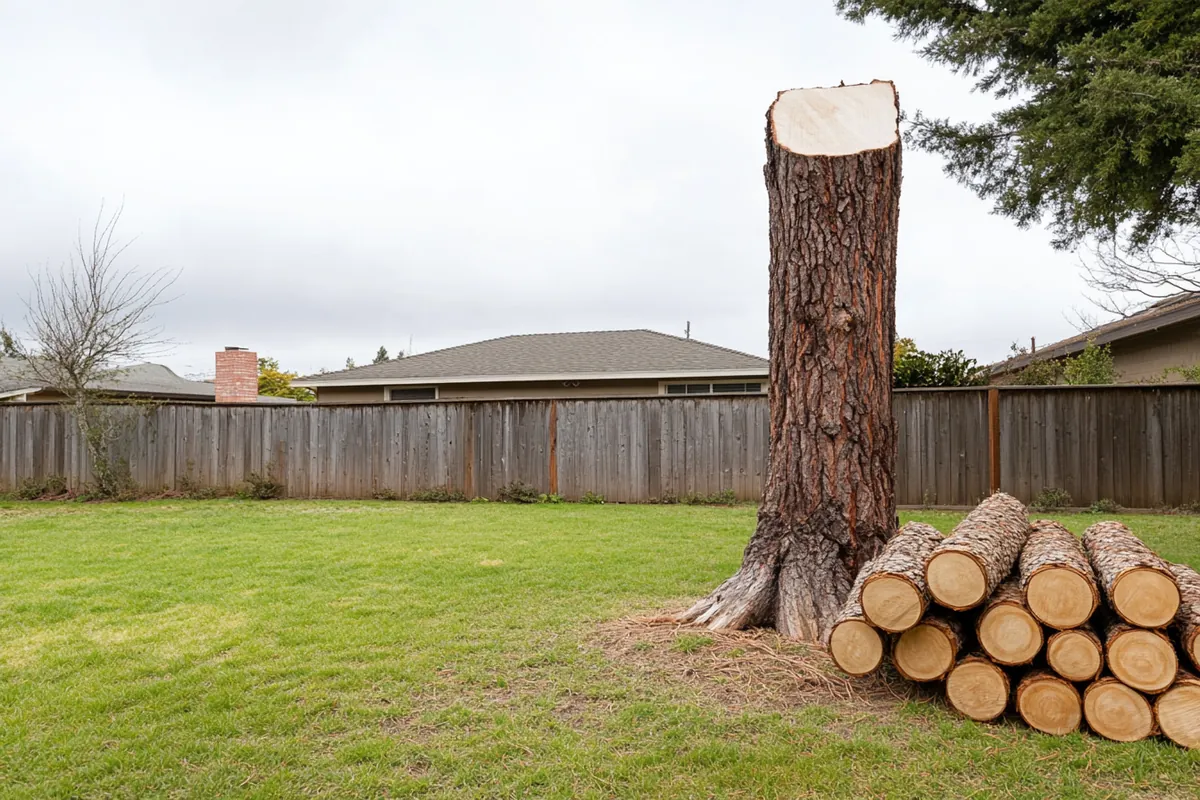
When the last piece is down, we cut the trunk low to the ground. Brush goes through the chipper, and the logs either leave on our truck or get cut to firewood length and stacked where you want them. A lot of Sonoma County homeowners keep the oak, since it burns hot and splits clean. Then we rake, blow off the hardscape and walk the yard with you. The stump stays unless you ask us to grind it out. Grinding takes it a few inches below the surface so you can plant or lay sod over the spot. If you're replanting, ask us about tree choices that suit your site, especially near the house in a fire area.
If removing one tree leaves the others more exposed to wind, a light tree trimming and pruning visit afterward can help the rest of the yard settle in.
Frequently Asked Questions
It starts with a look at the tree and anything it could hit, plus a permit check if the tree is a protected size. When the crew arrives, they lay down ground protection, climb and remove the limbs from the top down, lower each piece on ropes and then cut the trunk in sections. Last comes cleanup: chipping the brush, hauling or stacking the wood and raking the yard. Grinding the stump is an optional final step.
Size is the big one, but it's not the only one. A tree that leans over a roof costs more than the same tree in an open field, because every piece has to be lowered on a rope instead of dropped. Access matters too. If the trucks can't reach the backyard, the wood gets carried out by hand. Dead or rotten trees take extra care. Stump grinding and hauling are usually priced separately.
It is when the crew rigs it properly. Trees next to homes come down in small pieces, each one tied off and lowered under control, so nothing free-falls toward the roof. We also check the tree's condition before anyone climbs. A dead or decayed trunk may not hold a climber, and that changes the plan. The real risk comes from leaving a failing tree standing through another winter.