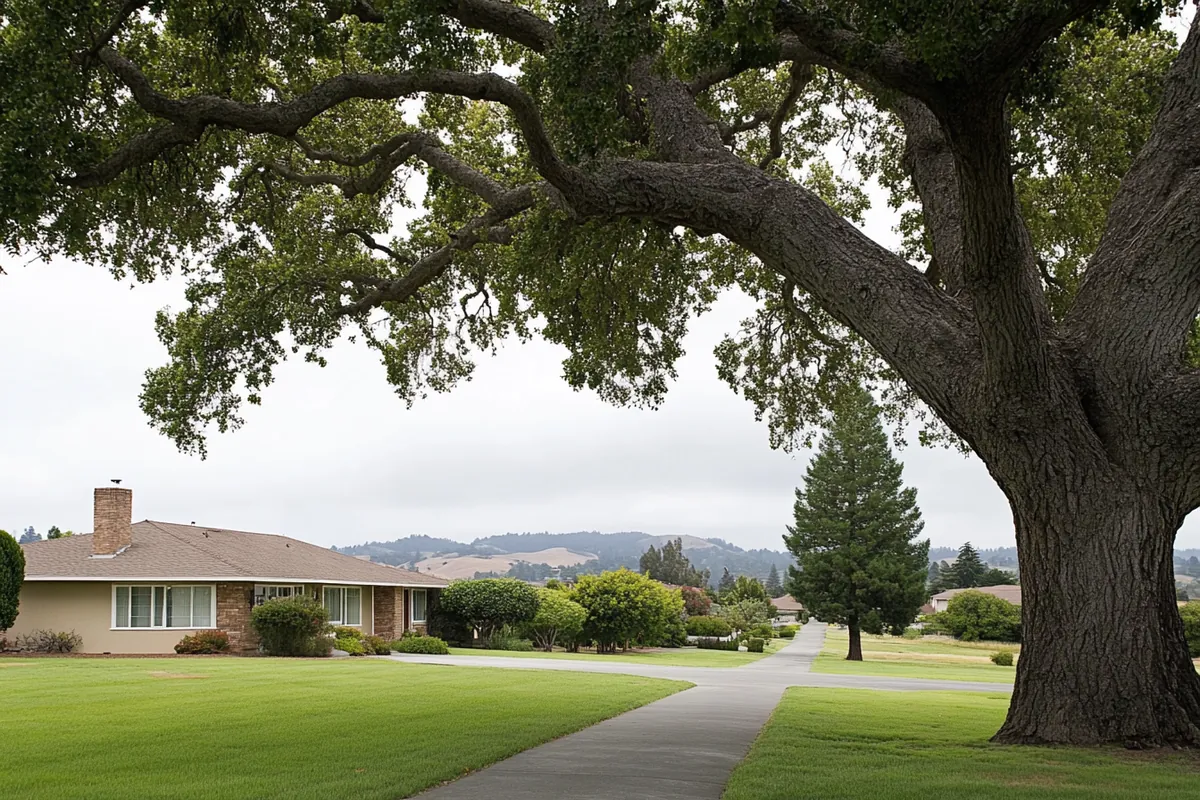
Santa Rosa grew up around big native trees, and a lot of them are still standing in backyards. Valley oaks that were here before the houses spread over roofs in Bennett Valley and the older streets near downtown. Redwoods planted when the Rincon Valley subdivisions went in now tower over the fences. Since the 2017 fires, thousands of rebuilt homes in Coffey Park and Fountaingrove sit next to trees that survived the heat but carry scorched bark and dead limbs. Add winter rain soaking the heavy ground on the plain, and you get a city where a lot of trees need attention at once.
We handle the full range here, from limbing a single oak off a roof to taking down a failing redwood in pieces over a backyard. Most Santa Rosa jobs start with tree trimming and pruning or a careful tree removal, and many need a permit check first, since the city's thresholds are low for oaks. We also do a lot of storm cleanup here after big winter systems, when the plain's saturated soil lets trees tip. Call, and we'll come see the tree at no charge.
Heritage Trees and Street Trees in Santa Rosa
Santa Rosa has two sets of tree rules homeowners run into. The first covers heritage trees on your own lot. A valley oak, blue oak or buckeye qualifies at only 6 inches across the trunk at chest height, which is 4.5 feet up. Coast live oaks count at 18 inches, and redwoods and Douglas fir at 24. Taking one out of an existing yard means applying to the city in writing first, and an approved permit stays valid for 60 days. The second covers street trees in the planting strip between the sidewalk and the curb. Those are city trees. Only city crews, or someone holding a permit from the Recreation and Parks Director, can cut them down or change them. You are allowed, and expected, to keep your own trees trimmed back from the sidewalk without a permit. Homes just outside the city limits, which are common along the edges of town, follow the county's rules instead. Up in Windsor, the rules are different again, which is why we check every address before quoting the work.
Trees That Came Through the Fires
Plenty of oaks and redwoods near Fountaingrove, Coffey Park and the hills off Highway 12 lived through the fires and leafed out again. Some are fine. Others are quietly declining years later. Heat can kill the cambium, the thin living layer under the bark, on one side of a trunk while the rest of the tree looks green. That dead side then decays, and the tree can fail in a storm long after the fire is forgotten. Signs worth checking include bark that sounds hollow or peels away in sheets, a trunk with one side that never grew new bark, and a crown that leafs out thinner every spring. Oaks often recover better than people expect. Pines and Douglas fir usually don't. Lots that were rebuilt also bring a newer problem: grading, trenching and new irrigation around trees that survived the fire, which can finish off a tree the flames didn't. A careful look sorts out which trees are stable and which aren't, and our tree health care visit is built for exactly that.
Common Questions
If it grows in the planting strip between the sidewalk and the street, it's a city street tree, and only the city or someone with a permit from the Recreation and Parks Director can remove or alter it. Trees on your side of the sidewalk are yours. Either way, you're expected to keep branches from your own trees from blocking the sidewalk, and that trimming doesn't need a permit.
Not always. Many oaks that were scorched in the fires have recovered fully and only needed dead limbs removed. The ones to worry about are trees with large areas of dead bark, cracks or decay on the burned side, and conifers that lost most of their needles. If you're not sure, have the tree looked at before deciding. A dead limb is a pruning job, and a dead trunk is a removal.